
As an Amazon Associate I earn from qualifying purchases.
Running large language models locally on Linux requires the right hardware or knowledge to set it up efficiently. You need either dedicated accelerators, pre-configured systems, or clear guidance to avoid compatibility issues and performance bottlenecks.
What matters most is support for Linux, sufficient processing power for inference, and practical resources to deploy models without unnecessary complexity. These picks were selected for their direct relevance to Linux for LLM use cases, covering hardware and educational materials.
This guide covers accelerators, mini PCs, and books that help you build, secure, or optimize LLM workflows on Linux.
Our Top 5 Linux For Llm Picks At A Glance
| Product | ||
|---|---|---|
 |
ASUS UGen300 USB AI Accelerator Plug-and-play LLM acceleration |
Check Price |
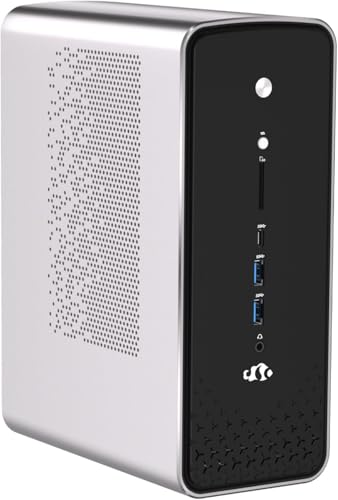 |
NIMO Mini PC with Linux OS All-in-one LLM workstation |
Check Price |
 |
ASUS UGen300 M2 AI Module Compact PCIe LLM acceleration |
Check Price |
 |
KALI LINUX LLMs SECURITY Book LLM security on Linux |
Check Price |
 |
Build Your Own AI Workstation Book Budget LLM setup on Linux |
Check Price |
Top 5 Linux For Llm Detailed Reviews
1. ASUS UGen300 USB AI Accelerator
The ASUS UGen300 USB AI Accelerator is a plug-and-play device that brings edge AI acceleration to Linux systems via USB 3.1 Gen2. Powered by the Hailo-10H chipset, it delivers 40 TOPS at just 2.5W, making it efficient for running LLMs and other AI workloads without heavy power draw. With 8GB LPDDR4 memory and support for 150+ pre-trained models, it’s a practical choice for developers needing portable, high-performance AI inference on Linux.
What We Like:
- Plug-and-play USB design works seamlessly with Linux and other OSes
- 40 TOPS at 2.5W offers strong performance with minimal power use
- 8GB LPDDR4 memory handles larger models without throttling
- Supports TensorFlow, PyTorch, and ONNX for broad framework compatibility
- Access to 150+ pre-trained models via the online model zoo
What Could Be Improved:
- USB 3.1 Gen2 bandwidth may limit performance for very large models
- No built-in cooling could lead to thermal throttling under sustained load
- Limited to INT4 precision, which may not suit all use cases
This is ideal for developers and security teams needing a portable Linux For Llm accelerator for edge tasks. Skip it if you require higher precision or need to run extremely large models continuously.
2. NIMO Mini PC with Linux OS
The NIMO Mini PC with AMD Ryzen AI Max+ 395 is a Linux For Llm workstation built for local AI tasks. Its 50 TOPS NPU accelerates LLM inference without cloud dependency, while 128GB LPDDR5X on a 256-bit bus keeps data flowing to the 16-core Zen 5 CPU and Radeon 8060S GPU. Dual 2.5G LAN and USB4 ports handle heavy network loads, and active cooling sustains 24/7 operation.
What We Like:
- Pre-installed Linux OS means no setup or bloatware
- 50 TOPS NPU enables fast local LLM processing
- 256-bit LPDDR5X memory prevents bottlenecks for AI workloads
- Dual 2.5G LAN and USB4 support high-speed networking and peripherals
- Robust cooling maintains performance under sustained loads
What Could Be Improved:
- High-end specs may be overkill for basic development tasks
- Compact size limits internal upgrade options
Buy this if you need a powerful Linux For Llm workstation for local AI development. Skip it if you only need a general-purpose machine or prefer a modular build.
3. ASUS UGen300 M2 AI Module
The ASUS UGen300 M2 AI Module is a compact PCIe 3.0 x4 M.2 Key-M card built for Linux For Llm workloads, embedding the Hailo-10H chip to deliver 40 TOPS at just 2.5W. It pairs 8GB LPDDR4 with access to 150+ pre-trained models, including LLMs and VLMs, making it ideal for edge AI tasks where power efficiency and small form factor matter. Compatibility spans x86 and ARM hosts, with support for TensorFlow, PyTorch, and ONNX frameworks.
What We Like:
- Plugs directly into M.2 Key-M slots for easy integration in embedded Linux systems
- Low 2.5W power draw enables fanless operation in tight spaces
- Pre-trained model zoo accelerates deployment of LLMs and vision tasks
- Supports major AI frameworks, reducing compatibility hurdles
- Works across x86, ARM, and Linux, offering broad hardware flexibility
What Could Be Improved:
- Limited to PCIe 3.0 x4 bandwidth may bottleneck high-throughput LLM inference
- 8GB LPDDR4 could constrain larger model sizes or multi-model workloads
This is a strong fit for developers building power-efficient Linux For Llm edge devices. Skip it if you need higher bandwidth or memory for large-scale inference.
4. KALI LINUX LLMs SECURITY Book
KALI LINUX LLMs SECURITY is a practical guide focused on securing AI models using Linux-based tools. It walks you through developing security methods for LLMs with high-performance frameworks, making it useful for developers and security teams who need actionable techniques. The book assumes familiarity with Kali Linux and AI basics, so it skips introductory fluff and dives into implementation.
What We Like:
- Covers real-world LLM security scenarios on Linux
- Uses Kali Linux tools for hands-on practice
- Focuses on high-performance frameworks
- Suitable for developers and security professionals
- Avoids unnecessary theory
What Could Be Improved:
- Requires prior knowledge of Kali Linux
- Not beginner-friendly for AI newcomers
Buy this if you work with Linux For Llm and need a no-nonsense security guide. Skip it if you lack experience with Kali Linux or AI fundamentals.
5. Build Your Own AI Workstation Book
This book guides you through repurposing an old PC into a private AI workstation running Linux for LLM tasks. It covers hardware selection, Linux setup, and local LLM deployment, making it practical for developers who want to avoid cloud costs. The step-by-step approach ensures you can leverage existing hardware without deep prior knowledge of AI infrastructure.
What We Like:
- Teaches cost-effective LLM setup on Linux
- Clear instructions for hardware and software configuration
- Focuses on privacy by keeping AI local
- Suitable for beginners with old PCs
- Reduces reliance on cloud services
What Could Be Improved:
- Assumes basic familiarity with Linux commands
- Limited to hardware you already own
Buy this if you want to run LLMs locally on a budget using Linux for LLM projects. Skip it if you need high-end performance or lack an old PC to repurpose.
How To Choose The Right Linux For Llm Solution
Performance and Compatibility
Linux for LLM workloads demands hardware that balances raw power with software support. Check if the device supports your preferred LLM frameworks and Linux distributions. PCIe modules like the ASUS UGen300 M2 offer direct integration but require compatible motherboards, while USB accelerators provide flexibility at the cost of bandwidth.
For all-in-one solutions, verify the pre-installed Linux OS version and its ability to handle large models without throttling. Memory and storage expandability are critical for scaling workloads.
Use Case Fit
Developers need plug-and-play acceleration for rapid prototyping, making USB devices like the ASUS UGen300 a practical choice. Security teams may prioritize pre-configured environments, such as the NIMO Mini PC, to reduce setup time. Books like the KALI LINUX LLMs SECURITY guide are ideal for those focused on hardening LLM deployments.
Future-Proofing
Invest in hardware with upgrade paths, such as additional PCIe slots or modular designs. Documentation and community support for Linux for LLM tools can save time when troubleshooting. Avoid proprietary solutions that lock you into specific ecosystems unless they offer clear advantages.
Frequently Asked Questions About Linux For Llm
Can I use any Linux distribution for LLM workloads?
Most distributions work, but Ubuntu and Debian have the broadest compatibility with LLM tools and hardware accelerators. Check vendor documentation for supported versions.
Do I need a GPU for running LLMs on Linux?
Not always. USB and PCIe accelerators like the ASUS UGen300 can offload tasks, but GPUs offer better performance for large models. Evaluate your model size and latency needs.
Is the ASUS UGen300 compatible with all Linux systems?
It supports major distributions, but kernel version and driver availability may vary. Verify compatibility with your specific setup before purchasing.
What’s the advantage of a Mini PC for LLM tasks?
Mini PCs like the NIMO provide a self-contained, pre-configured environment, reducing setup complexity. They’re ideal for teams needing portability or a dedicated LLM workstation.
Are books like Build Your Own AI Workstation useful for beginners?
Yes, they guide you through budget-friendly setups and Linux configurations. However, they assume basic familiarity with command-line interfaces and hardware assembly.
Final Thoughts On Linux For Llm Options
The ASUS UGen300 USB AI Accelerator is the best overall pick for developers needing plug-and-play Linux for LLM acceleration. The NIMO Mini PC is the top alternative for teams wanting an all-in-one workstation with minimal setup. Both balance performance and practicality for most use cases.