
As an Amazon Associate I earn from qualifying purchases.
You want a planted aquarium that looks alive without constant upkeep. Houseplants for aquarium setups do more than decorate—they oxygenate water, absorb nitrates, and give fish and shrimp safe cover. The trick is picking plants that match your tank’s light, flow, and maintenance level.
What matters most is compatibility. Floating plants need no substrate but can block light if unchecked. Rooted plants require nutrient-rich soil and may need CO2. Water conditioners solve tap water issues that harm plants and livestock alike. Driftwood adds structure but leaches tannins that soften water.
These picks were chosen for variety in function, budget, and care needs. They’re not just plants—they’re tools to balance your ecosystem. This guide covers floating plants, substrates, conditioners, and decor to cover every base.
You’ll find picks for beginners, shrimp keepers, and those who want zero hassle. No fluff, just the right tool for the job.
Our Top 6 Houseplants For Aquarium Picks at a Glance
| Product | ||
|---|---|---|
 |
60+ Leaves Water Spangles Salvinia Minima Floating Live Aquarium Plants Low-maintenance floating plants |
Check Price |
 |
majoywoo Natural Small Driftwood for Aquarium Decor Natural aquascaping structure |
Check Price |
 |
Fluval Plant and Shrimp Stratum Aquarium Substrate 8.8 lb Planted tanks and shrimp habitats |
Check Price |
 |
API TAP WATER CONDITIONER Aquarium Water Conditioner 16-Ounce Safe tap water for fish and plants |
Check Price |
 |
Cute Farms Tap Water Conditioner for Plants Aquariums 16oz Plants and aquariums with heavy metal issues |
Check Price |
 |
HeiGULE Tap Water Conditioner for Plants Aquariums 6.7OZ Faster nutrient absorption and root health |
Check Price |
Top 6 Houseplants For Aquarium: Detailed Reviews
1. 60+ Leaves Water Spangles Salvinia Minima Floating Live Aquarium Plants
Water Spangles (Salvinia Minima) are floating aquarium plants that spread into a dense green mat across the water’s surface. They need only moderate light and no CO2 or substrate, so you can drop them in and let them grow. The mat traps debris and shades the water, which helps reduce algae and keeps fish comfortable. In small tanks they can cover the surface quickly, so you’ll need to thin them out occasionally to avoid blocking light from below.
What We Like:
- Floats without planting, so no substrate or CO2 setup required
- Traps floating debris and shades water to cut down on algae
- Grows fast in moderate light, ideal for low-tech tanks
- Safe for shrimp and small fish that need cover
- Cheap to start and easy to propagate by splitting clumps
What Could Be Improved:
- Can block light if left untrimmed, risking plant starvation below
- May need frequent thinning in high-light or warm tanks
- Doesn’t root, so it won’t help with nutrient export like rooted plants
Buy Water Spangles if you want a no-fuss floating plant that cleans water and shelters small fish. Skip it if your tank runs hot or you prefer rooted plants that export nutrients.
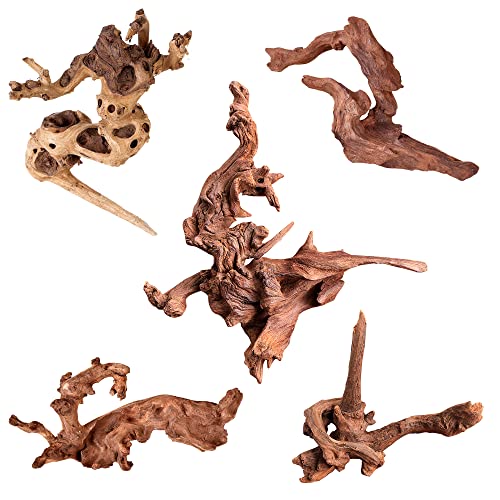
2. majoywoo Natural Small Driftwood for Aquarium Decor
majoywoo Natural Small Driftwood is a single piece of untreated, naturally shaped wood designed to sit in your aquarium like a miniature fallen branch. Its irregular curves and textures give planted tanks a more organic look than plastic replicas, while the rough surface provides a place for moss or epiphytic plants to attach. The wood won’t leach tannins like some driftwood, so it won’t soften the water or discolor it over time, yet it still adds the visual weight of a natural anchor without looking artificial.
What We Like:
- Each piece is unique, so you won’t get a matching set of identical sticks
- Safe for tanks 5–10 gallons and fits small aquascapes without crowding plants
- Sturdy enough to stay put under water flow and won’t crumble over years
- Works in simple setups or as the base for moss trees and miniature landscapes
- Backed by a satisfaction guarantee if it arrives damaged
What Could Be Improved:
- No pre-soaking instructions, so you’ll need to boil or soak it yourself to remove dust
- Size range is wide (4.5–7.5 inches), so you may still need to hunt for the exact look you want
- Lacks holes or grooves that could help secure plants more firmly
Buy this driftwood if you want a natural focal point in a small tank without changing water chemistry. Skip it if you need a ready-to-use piece with built-in plant attachment spots or if you’re after a very specific shape.
3. Fluval Plant and Shrimp Stratum Aquarium Substrate 8.8 lb
Fluval Plant and Shrimp Stratum is a nutrient-rich substrate designed for freshwater planted aquariums. Its light, porous structure lets roots spread easily, while the neutral to slightly acidic pH range supports both plants and sensitive species like shrimp. The material also hosts beneficial bacteria for biological filtration, reducing maintenance. Unlike plain gravel, it resists discoloration from driftwood and organic waste, keeping water clearer over time.
What We Like:
- Encourages strong root growth for healthier, faster-growing plants
- Maintains stable pH ideal for shrimp, tropical fish, and live plants
- Hosts beneficial bacteria to improve biological filtration
- Resists discoloration from driftwood and organic waste
- Comes in an 8.8 lb bag, enough for most medium tanks
What Could Be Improved:
- Requires careful rinsing before use to avoid cloudy water initially
- Not suitable for saltwater tanks or non-planted setups
- More expensive than basic substrates like gravel or sand
Buy this if you have a planted freshwater tank or shrimp habitat and want stable conditions with less maintenance. Skip it for bare-bottom tanks or if you need a budget-friendly substrate.
4. API TAP WATER CONDITIONER Aquarium Water Conditioner 16-Ounce
API TAP WATER CONDITIONER is a concentrated formula that removes chlorine, chloramines, and other tap water chemicals in one step. It prevents gill damage and tissue irritation in fish by neutralizing harmful compounds before they enter the tank. The super strength formula means you use less product per water change, making it cost-effective for frequent maintenance. Add 1 ml per 20 gallons when adding or changing water, or when introducing new fish to any freshwater or saltwater setup.
What We Like:
- Removes chlorine, chloramines, and heavy metals in a single step
- Prevents gill damage and tissue irritation in fish
- Super strength formula reduces cost per water change
- Safe for both freshwater and saltwater aquariums
- Easy to dose with clear instructions
What Could Be Improved:
- Requires precise measurement for accurate dosing
- Not suitable for large water changes without multiple applications
- Bottle may leak if not stored upright
Buy this if you use tap water and want a reliable, no-fuss way to keep your fish safe. Skip it if you already use a different conditioner or have a system that bypasses tap water entirely.
5. Cute Farms Tap Water Conditioner for Plants Aquariums 16oz
Cute Farms’ Tap Water Conditioner is a 16oz bottle designed to treat tap water for houseplants, hydroponics, and aquariums. It removes chlorine, chloramines, and heavy metals while balancing pH, which protects delicate roots and prevents issues like brown leaf tips or stunted growth. The formula is highly concentrated, treating up to 320 gallons with just 1/4 capful per gallon, making it efficient for regular use.
What We Like:
- Detoxifies heavy metals that can stunt plant growth and harm fish
- Balances pH to prevent water-related issues like wilting or crispy leaf tips
- Safe for all aquatic life, including sensitive plants and fish
- Highly concentrated formula lasts long and reduces waste
- Made in the USA with a focus on quality and sustainability
What Could Be Improved:
- No measuring cup included, so you’ll need to provide your own
- Overuse can lead to nutrient imbalances in soil-based plants
- Not suitable for saltwater aquariums or ponds
Buy this if you’re dealing with tap water issues for houseplants or aquariums. Skip it if you need a solution for saltwater setups or prefer pre-measured dosing.
6. HeiGULE Tap Water Conditioner for Plants Aquariums 6.7OZ
HeiGULE’s tap water conditioner is a concentrated additive that treats tap water for houseplants, hydroponics, and aquariums. The formula reduces mineral stress on roots, helping plants stand upright and grow more symmetrically. You mix 10 ml per 100 ml of tap water, so a small bottle goes a long way. It’s marketed for delicate species like calathea and ferns, but works broadly for any plant sensitive to chlorine or heavy metals.
What We Like:
- Dilutes easily with a simple 10:100 ml ratio, no overnight soaking needed
- Promotes upright growth and fuller foliage in plants prone to drooping or curling
- Ultra-concentrated—just a few drops treat multiple gallons of water
- Works across houseplants, hydroponics, aquariums, and garden ponds
- Gentle formula safe for sensitive species like calathea and ferns
What Could Be Improved:
- No clear dosing guide for aquarium use—stick to plant-focused ratios at your own risk
- Scented formula may linger in enclosed spaces like terrariums
- Not a substitute for proper water testing if your tap water has unusual contaminants
Buy this if you grow sensitive plants or keep aquariums with delicate species and want a no-fuss water treatment. Skip it if you need a dedicated aquarium conditioner with precise dosing instructions or if your tap water is already very soft.
How to Choose the Right Houseplants For Aquarium
Water chemistry and plant needs
Match plants to your water’s hardness and pH. Soft, acidic water suits ferns and mosses; harder, alkaline water works for water hyacinth and water lettuce. Test your tap water first, then pick species that thrive in those conditions. Floating plants like water spangles are forgiving but still need the right balance to stay green and clean the water.
Lighting and placement
Low-light rooms need plants like Java fern that tolerate shade. Bright spots above the tank suit floating plants that grow fast and block excess light. Position rooted plants where their leaves won’t shade others. Too much light causes algae; too little stunts growth. Adjust the fixture or add floating cover to control intensity.
Rooting vs floating vs attached
Floating plants like water spangles spread quickly and absorb nitrates fast, but they can block light if untrimmed. Rooted plants need a nutrient-rich substrate like Fluval Stratum to anchor and feed. Attached plants such as Java fern grow on driftwood or rock but grow slowly and need patience. Choose based on how much maintenance you want and how you want the tank to look.
Maintenance and growth rate
Fast growers clean water faster but require frequent trimming to avoid overcrowding. Slow growers stay tidy longer but remove fewer nutrients. Decide if you want a lush jungle or a minimalist look. Also check how often you’ll need to dose fertilizers or condition tap water. Some plants need extra iron or CO2; others do fine with basic care.
Frequently Asked Questions About Houseplants For Aquarium
Can I use tap water straight in my planted aquarium?
No. Tap water often contains chlorine, chloramine, and heavy metals that harm plants and fish. Always use a conditioner like API TAP WATER CONDITIONER or Cute Farms to neutralize these before adding it to the tank.
How often should I trim floating houseplants?
Trim when fronds cover more than half the water surface or block light. Water spangles grow fast; expect to trim every 1–2 weeks in warm water. Remove excess to keep flow and gas exchange healthy.
Do I need special substrate for houseplants in an aquarium?
Rooted plants need nutrient-rich substrate like Fluval Plant and Shrimp Stratum to anchor and feed. Floating plants don’t need substrate; they absorb nutrients from water. Choose based on the plants you keep.
Will driftwood change my water chemistry?
Yes. Natural driftwood like majoywoo releases tannins that soften water and lower pH slightly. If you keep fish that prefer neutral water, soak the wood first or use buffering substrate to balance the effect.
Can houseplants replace a filter in my aquarium?
No. Houseplants help by absorbing nitrates and providing oxygen, but they don’t replace mechanical or biological filtration. Use plants alongside a filter for clean, stable water and healthy fish.
How do I know if my plants are getting enough nutrients?
Signs include pale leaves, slow growth, or holes in new leaves. Test water for nitrates and phosphates; dose fertilizers if levels are low. Iron deficiency shows as yellowing between veins on new growth.
Final Thoughts on the Best Houseplants For Aquarium
For most planted aquariums, floating water spangles give the best balance of water cleaning, low upkeep, and visual cover. If you prefer rooted plants or shrimp tanks, Fluval Plant and Shrimp Stratum paired with Java fern on driftwood creates a natural look without constant pruning. Always condition tap water first; a single bottle of API TAP WATER CONDITIONER covers many setups and keeps plants and livestock safe.